Solid Ingress Test Equipment
ED&D solid ingress test equipment supports repeatable dust-protection and dust-tightness evaluations for enclosure testing programs associated with IEC 60529, EN 60529, IEC 60335, and MIL-STD-810G. This product family includes Series DTC Dust Chambers, the MIL-DST-09 Blowing Dust Chamber, DTC-830 Dust Chamber Talcum Sieve, DTC-840 Dust Chamber Talcum Shaker, and TX0005 75 Micron Talc for controlled solid-particle exposure workflows.
Dust-Protected and Dust-Tight Testing
Equipment is available for enclosure evaluations associated with IP5X and IP6X protection levels.
Complete Dust Test Setup
ED&D offers dust chambers, blowing-dust equipment, talcum handling accessories, and specified test media for complete solid-ingress test programs.
Organized by Test Function
This page is grouped into dust chambers, dust accessories, test media, comparison guidance, and applications to make equipment selection easier.
Tell us the exact standard, required IP level, specimen size, and whether you need a full chamber, blowing-dust setup, talcum handling accessories, or replacement test media.
Solid Ingress Testing for Dust Protection and Dust-Tight Enclosures
Solid ingress testing is used to determine how well an enclosure resists the entry of dust and other solid foreign material under controlled exposure conditions. In standards-based programs, this often means evaluating whether a product is properly protected for IP5X dust-protected or IP6X dust-tight performance, or whether it can withstand a defined blowing dust environment in a military-style method.
ED&Dās solid ingress equipment family includes dust chambers for controlled talcum exposure, a blowing dust chamber for military-oriented test work, accessories for handling and conditioning test powder, and specified talc media for repeatable test preparation. Together, these products support test programs tied to IEC 60529, EN 60529, IEC 60335, and MIL-STD-810G.
Because solid-ingress testing is method-specific, the correct setup depends on the required protection level, dust concentration, specimen size, airflow or circulation arrangement, and the exact chamber or blowing-dust procedure called for by the governing standard.
Important standards note: solid-ingress testing is only meaningful when chamber size, dust media, dust concentration, exposure duration, and specimen preparation match the exact method required by the governing standard.
How This Page Is Organized
- Dust Chambers: enclosure test systems for IP5X / IP6X and military blowing-dust workflows
- Dust Accessories: talcum sieve and shaker equipment that supports dust preparation and handling
- Test Media: 75 micron talc for chamber testing and replacement supply planning
Dust Chambers
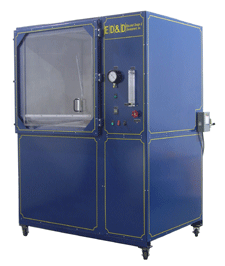
Series DTC Dust Chambers
Dust chambers for checking protection against solid foreign objects and verifying enclosure performance for IP5X dust-protected and IP6X dust-tight testing.
Chambers are built from rectangular steel tube and sheet steel construction, include four lockable dollies, and place the control cabinet with control and monitoring elements on the right-hand side. System voltage and frequency can be matched to customer requirements.
Referenced for IEC 60529, EN 60529, and IEC 60335 test programs. Includes TX0005 75 micron talc (10 kg).
MIL-DST-09 Blowing Dust Chamber
Blowing dust chamber for military-oriented dust exposure testing.
Includes an industrial-duty fan and access door. Positioned for MIL-STD-810G blowing-dust workflows.
Series DTC Standard Models
| Model | Internal Depth | External Depth | External Width | External Height | Dust Pumps, Vibrators | Slides for Specimens | Cabinet Walls |
|---|---|---|---|---|---|---|---|
| DTC-100 | 800 mm | 1000 mm | 1320 mm | 1910 mm | 1 | 1 | Painted Steel |
| DTC-200 | 1600 mm | 1800 mm | 1320 mm | 1910 mm | 2 | 2 | Painted Steel |
| DTC-300 | 2400 mm | 2600 mm | 1320 mm | 1910 mm | 3 | 2 | Painted Steel |
Selection note: choose the chamber based on specimen dimensions, required specimen quantity, and whether the test program calls for an IP dust chamber or a separate blowing-dust arrangement.
Dust Handling Accessories
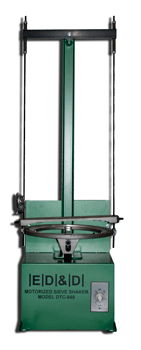
DTC-830 Dust Chamber Talcum Sieve
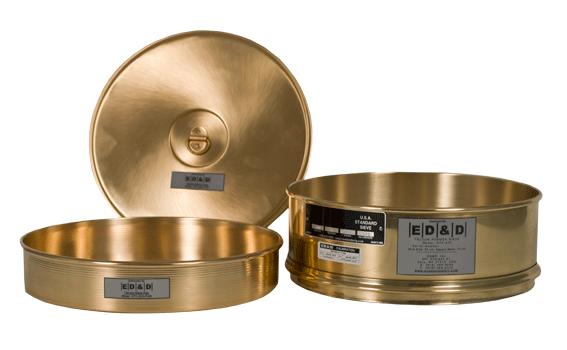
Talcum sieve accessory designed to support motorized sieve shaking of talcum powder used in dust chamber testing.
Best fit when the lab needs more controlled talcum preparation and handling as part of repeatable dust-chamber workflows.
DTC-840 Dust Chamber Talcum Shaker
Talcum shaker accessory for dust chamber setups where more consistent powder handling and preparation are required.
Useful for labs that run repeated dust tests and want dedicated accessories to support test-media preparation and chamber loading.
Accessory note: dust accessories do not replace the chamber itself. They support powder preparation, conditioning, and handling as part of a complete solid-ingress test setup.
Dust Chamber Test Media
TX0005 75 Micron Talc (Agalite)
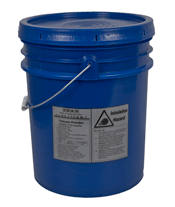
Talcum powder specified for use in Series DTC dust chamber testing.
Available in a 10 kg bucket or 1.55 kg container. The standard dust concentration is 2 kg / m³ and talcum should be replaced every 20 tests.
Available Talc Package Sizes
| Model | Container Weight |
|---|---|
| DTC-810 | 10 KG |
| DTC-825 | 1.55 KG |
Media note: keeping fresh, correctly specified talc in the chamber is essential for repeatable solid-ingress results.
Which Solid Ingress Test System Is Right for Your Lab?
| Equipment Type | Primary Use | Typical Models | Best Fit |
|---|---|---|---|
| Dust Chambers | IP dust-protection and dust-tight testing | Series DTC | IP5X / IP6X enclosure dust-ingress programs |
| Blowing Dust Chamber | Military-style blowing-dust exposure | MIL-DST-09 | MIL-STD-810G dust exposure testing |
| Dust Accessories | Talc preparation and handling | DTC-830, DTC-840 | Labs running repeated chamber testing with controlled powder handling needs |
| Test Media | Specified chamber dust media | TX0005 / DTC-810 / DTC-825 | Replacement talc and chamber media planning |
Selection guidance: start with the required standard and protection level, then decide whether you need a full dust chamber, a blowing-dust system, support accessories, replacement test media, or a complete combination of all three.
Frequently Asked Questions
What is the difference between IP5X and IP6X?
IP5X is associated with dust-protected performance, while IP6X is associated with dust-tight performance under the conditions defined by the governing standard.
What does a dust chamber do?
A dust chamber exposes the specimen to controlled dust conditions so the lab can evaluate how well the enclosure prevents or limits the entry of solid particles.
Why would a lab need a separate blowing dust chamber?
A blowing dust chamber is used when the required method is based on a moving-air dust exposure, such as a military-style blowing-dust procedure, rather than a standard IP dust chamber setup.
How often should talcum powder be replaced?
Talcum should be replaced every 20 tests.
Why do dust accessories matter?
Sieve and shaker accessories help keep talcum handling more controlled and repeatable, which supports more consistent dust test preparation.
Does one solid-ingress setup cover every dust method?
Not always. IP dust testing, appliance-related dust testing, and military blowing-dust methods may require different chamber types, airflow arrangements, and handling accessories.
Send the exact standard, specimen size, and target protection level, and we can help narrow the right chamber and accessory setup.
Typical Solid Ingress Test Applications
ED&D solid ingress systems are used in electrical safety laboratories, enclosure verification programs, product certification test labs, appliance testing environments, and military or ruggedized product workflows where controlled dust exposure must be applied repeatably.
Depending on the equipment and method, these workflows may relate to IEC 60529, EN 60529, IEC 60335, and MIL-STD-810G.
- IP5X dust-protected testing
- IP6X dust-tight testing
- Controlled enclosure dust-ingress evaluation
- Appliance and enclosure dust exposure programs
- Military-style blowing dust arrangements
- Bench and floor-standing chamber-based test setups
- Talc handling and replacement planning
- Repeatable chamber media preparation
- Integrated chamber, accessory, and media test programs
Method note: solid-ingress testing is only meaningful when dust media, concentration, circulation, duration, and specimen preparation all match the exact method required by the governing standard.