
Mechanical Abuse Test Equipment
ED&D mechanical abuse test equipment supports bump testing and tumbling barrel testing for mechanical-strength evaluations associated with IEC, EN, and VDE test methods. This page covers the BMP-65 Bump Test Apparatus and the F06.15 Tumbling Barrel Test Machine.
Tell us the exact standard, specimen size and weight, and whether your lab needs bump testing or tumbling barrel testing.
Mechanical Abuse Testing for Repeated Shock and Tumbling
Mechanical abuse testing evaluates a specimen under a defined sequence of repeated physical events. Depending on the applicable method, the specimen may be subjected to repeated short-distance platform falls or repeated falls inside a rotating barrel.
The BMP-65 uses a pneumatically operated platform with a defined 50 mm fall. The F06.15 uses barrel rotation to produce repeated specimen falls. Equipment selection depends on the exact standard and clause, specimen dimensions and mass, required motion, cycle count, and installation requirements.
Method note: confirm the required motion, drop height or barrel conditions, cycle count, specimen support, and stop conditions specified by the applicable method.
BMP-65 Bump Test Apparatus
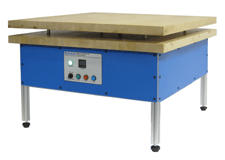
The BMP-65 Bump Test Apparatus generates repeated bump tests for specimens. The specimen is placed on a wooden platform that is raised and then allowed to fall rapidly through a defined 50 mm drop onto a supporting platform below.
Product Details
- Floor-standing bump test system
- Specimen is placed on Wooden Platform No. 1
- Platform No. 1 falls 50 mm in free-fall form onto Wooden Platform No. 2
- Pneumatic cylinders slowly raise Platform No. 1 and release it for the fall
- Control unit includes ON/OFF cycling timer for up/down movement control
- Counter with automatic stop included
Confirm the specimen dimensions, mass, cycle count, and applicable method before selecting the apparatus.
F06.15 Tumbling Barrel Test Machine
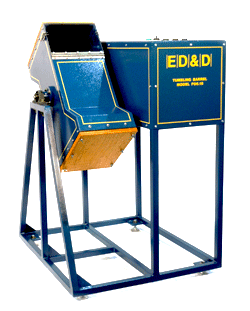
The F06.15 Tumbling Barrel Test Machine subjects electrical appliances, components, and related products to repeated falls during barrel rotation under the conditions required by the applicable method.
Available configurations depend on the governing standard, specimen dimensions and mass, required barrel geometry, rotation conditions, cycle count, and laboratory installation requirements.
Product Details
- Tumbling barrel system for mechanical-strength evaluation
- Applies repeated specimen falls during barrel rotation
Confirm the exact standard, specimen dimensions and mass, barrel requirements, rotation conditions, cycle count, and installation requirements before selecting the configuration.
Frequently Asked Questions
What is a bump test apparatus used for?
A bump test apparatus applies repeated short-drop mechanical shock to a specimen under defined test conditions.
What does a tumbling barrel test machine do?
A tumbling barrel machine rotates the specimen inside a barrel so the specimen undergoes repeated falls during rotation.
When should a lab choose bump testing instead of tumbling?
Choose bump testing when the method requires repeated short-drop or fall-down style events. Choose tumbling when the method specifically calls for repeated barrel rotation and repeated specimen falling during that motion.
How is an F06.15 configuration selected?
The appropriate configuration depends on the governing standard, specimen dimensions and mass, required barrel arrangement, rotation conditions, cycle count, and laboratory installation requirements.
Are these systems tied to specific standards?
Yes. The F06.15 is associated with IEC, EN, and VDE mechanical-strength methods. Suitability depends on the exact standard, clause, and required test conditions.
Can one mechanical abuse tester cover every abuse method?
No. Different standards call for different motions, specimen handling, drop heights, or repeated abuse patterns, so the required equipment depends on the exact method.
Provide the exact standard and clause, specimen dimensions and mass, required motion, cycle count, and installation requirements.