
Knife Switches for Electrical Fault-Condition Testing
ED&D KS Knife Switches provide a visible, manually operated switching method for open-circuit and short-circuit component fault testing in electrical safety laboratories, compliance engineering programs, and product evaluation workflows. Available in multiple pole and throw configurations, these 30 A knife switches help laboratories build clear, configurable fault-condition test arrangements.
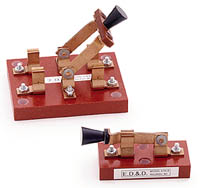
Open- and Short-Circuit Fault Testing
Use KS knife switches to manually introduce or remove circuit connections when a safety standard or laboratory procedure requires a component fault condition.
Multiple Pole and Throw Options
Select single-throw, fusible single-throw, or double-throw configurations with one, two, three, or four poles.
Visible Manual Switching
The exposed blade position provides a clear visual indication of switch state for controlled laboratory setups.
Tell us the required pole count, throw type, fault arrangement, operating voltage, and expected current so we can help identify the appropriate configuration.
Knife Switches for Open- and Short-Circuit Fault Testing
Electrical safety evaluations often require a laboratory to simulate a single-fault condition by opening or shorting a component or circuit path. A knife switch provides a simple, visible, and manually controlled way to make or break that connection within a properly designed test arrangement.
ED&D KS Knife Switches are intended for configurable component fault testing in standards-driven electrical safety programs. The family includes single-throw and double-throw models with one, two, three, or four poles, allowing one or several conductors to be switched together. Fusible single-throw configurations are also available.
These switches may support test arrangements associated with standards such as IEC 60601, IEC 61010, IEC 60950, and EN 60950 when the applicable clause requires an open-circuit or short-circuit fault condition. The exact switch arrangement must always follow the governing standard, product category, circuit ratings, and laboratory procedure.
Important safety note: knife switches expose conductive switching components and are intended for controlled laboratory installations. The completed test setup must include appropriate guarding, spacing, overcurrent protection, grounding, interlocks, and safe operating procedures for the voltage, current, and available fault energy involved.
Why Use a Knife Switch in a Test Setup?
- Creates a deliberate open-circuit or short-circuit condition
- Provides visible confirmation of the mechanical switch position
- Allows multiple conductors to be switched together with multipole models
- Supports repeatable manual fault introduction during laboratory testing
- Offers single-throw, fusible single-throw, and double-throw configurations
- Provides model options with one, two, three, or four poles
KS Knife Switches
The KS Knife Switches are manual switching devices intended for open-circuit and short-circuit component fault testing in standards-driven safety programs. Multiple throw and pole-count options make them useful for configurable fault-condition test setups.
Product Details
- Available in single-throw, fusible single-throw, and double-throw types
- Available with 1, 2, 3, or 4 poles
- Used for open-circuit and short-circuit component fault testing
- Corrosion-resistant contacts
- Insulating base construction
- 30 A rated
Typical standards references: IEC 60601, IEC 60950, IEC 61010, and EN 60950.
Typical configuration options: single-throw model numbers A-10S, A-11S, A-12S, and A-13S; double-throw model numbers A-14D, A-15D, A-16D, and A-17D.
Selection note: verify pole count, throw type, fault arrangement, and current rating against the exact clause or lab method before choosing a switch configuration.
Knife Switch Model Reference
| Poles | Single Throw Model No. | Double Throw Model No. |
|---|---|---|
| 1 | A-10S | A-14D |
| 2 | A-11S | A-15D |
| 3 | A-12S | A-16D |
| 4 | A-13S | A-17D |
KS Knife Switch Model Selection
| Poles | Single-Throw Model | Double-Throw Model | Typical Selection Consideration |
|---|---|---|---|
| 1 | A-10S | A-14D | Switching one conductor or one fault path |
| 2 | A-11S | A-15D | Simultaneous switching of two conductors |
| 3 | A-12S | A-16D | Three-conductor or three-phase-related laboratory arrangements |
| 4 | A-13S | A-17D | Four-conductor arrangements or additional switched paths |
Single throw vs. double throw: a single-throw switch makes or breaks one circuit path. A double-throw switch transfers each pole between two circuit paths. Select the configuration that matches the exact fault condition and wiring arrangement required by the test method.
Selection guidance: confirm pole count, throw type, operating voltage, expected current, available fault current, duty, conductor size, and required protection before specifying a knife switch. The listed switches are rated at 30 A, but the complete test setup must be evaluated for all applicable electrical hazards.
Knife Switch Frequently Asked Questions
What is a knife switch used for in an electrical safety laboratory?
A knife switch provides a manual way to open, close, or transfer a circuit connection. In a safety laboratory, it can be incorporated into a controlled setup used to introduce an open-circuit or short-circuit component fault required by a standard or internal procedure.
What is the difference between single-throw and double-throw knife switches?
A single-throw switch makes or breaks one circuit path for each pole. A double-throw switch transfers each pole between two circuit paths, which is useful when a test setup must alternate between two connections.
How many poles are available?
ED&D KS Knife Switches are available with one, two, three, or four poles. Multipole models allow multiple conductors to be switched mechanically at the same time.
What is the current rating of the KS Knife Switches?
The listed KS Knife Switches are rated at 30 A. Selection must also account for operating voltage, available fault current, duty, switching conditions, and the protection built into the complete test setup.
Can a knife switch be used to short-circuit a component?
Yes, a properly selected knife switch can be wired into a controlled laboratory arrangement to create a short-circuit fault condition. The circuit must include suitable current limiting, overcurrent protection, guarding, and procedures for the available fault energy.
Does a knife switch itself demonstrate compliance with an IEC standard?
No. The switch is one component of the laboratory test arrangement. Compliance depends on the complete procedure, the product under test, the exact standard clause, the applied fault condition, and the resulting observations or measurements.
Are IEC 60950 and EN 60950 still relevant?
They remain relevant as legacy references for older products, historical compliance files, and established laboratory procedures that still cite those standards.
Provide the required pole count, throw type, circuit voltage, expected current, and intended open- or short-circuit fault arrangement.
Typical Knife Switch Testing Applications
ED&D KS Knife Switches are used in controlled laboratory and engineering environments where a test procedure requires a visible, manually operated means of opening, closing, or transferring one or more electrical circuit paths.
Common uses include introducing component faults during evaluations associated with IEC 60601, IEC 61010, and legacy IEC 60950 or EN 60950 programs. Their use depends on the exact clause and circuit under evaluation; the presence of a knife switch does not by itself establish compliance with any standard.
- Open-circuiting a component or conductor
- Short-circuiting a component under controlled conditions
- Introducing a repeatable single-fault condition
- Switching multiple conductors simultaneously
- Transferring circuits between two paths with double-throw models
- Building visible manual switching panels for laboratory setups
- Electrical product safety evaluations
- Compliance engineering and design verification
- Research, development, and troubleshooting test fixtures
Setup note: the switch is only one part of the test system. Use appropriately rated wiring, terminals, barriers, fusing or current limiting, grounding, emergency isolation, and documented operating procedures for the hazards present.